
8 hr
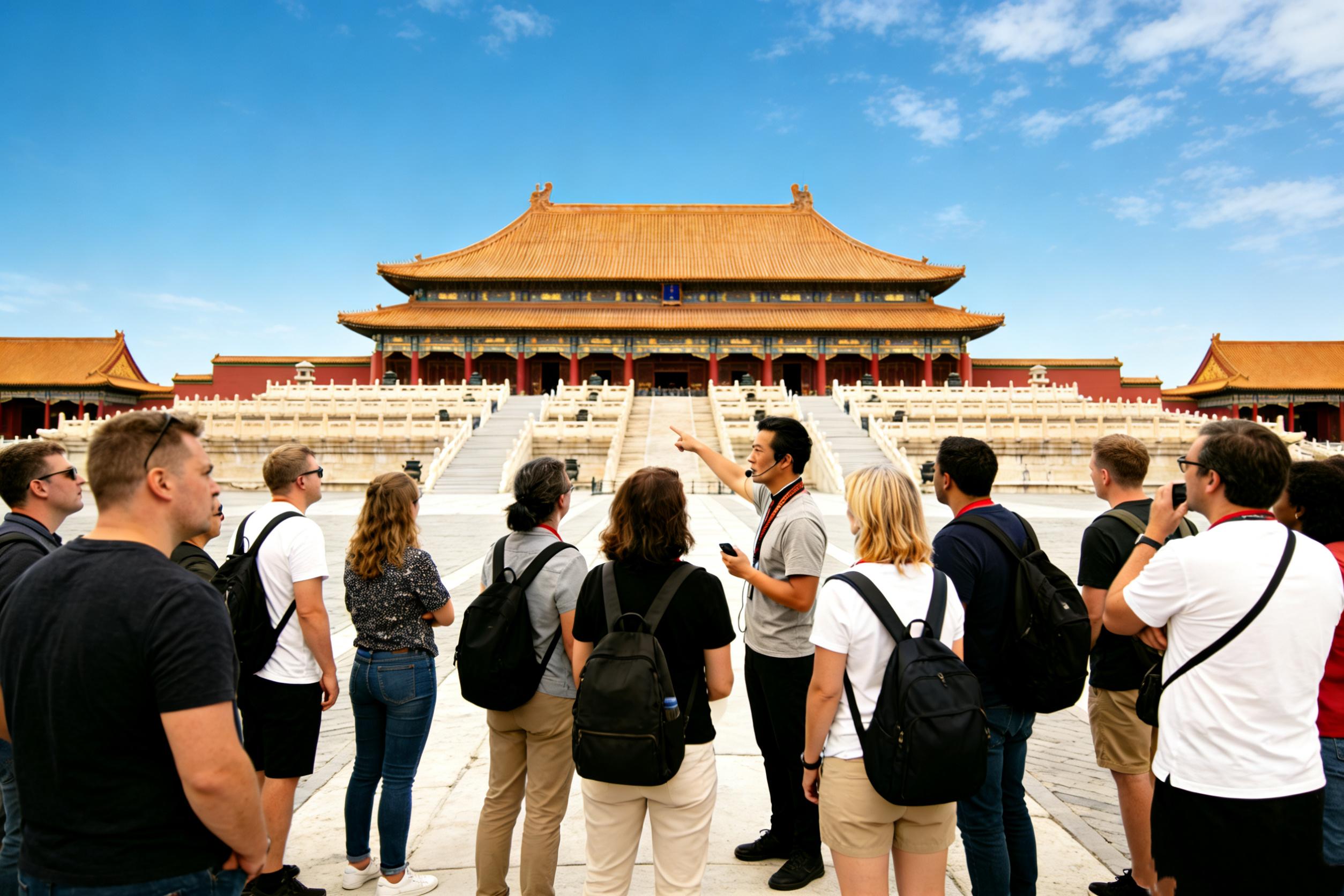
Forbidden City Guided Tour with Tickets
Discover China's imperial palace with expert commentary, flexible scheduling, and hassle-free entry
Reserve
Hand-picked by our editors — only the best 5 experiences from 38 reviewed
Verified partners for every tour, free cancellation where available, and instant confirmation on every booking.
8 hr
Discover China's imperial palace with expert commentary, flexible scheduling, and hassle-free entry
Reserve
3 hr 30 min
Explore historic alleyways while sampling authentic Beijing specialties from rooftop hotpot to endangered dishes
Reserve
4 hr
Explore historic alleyways while sampling authentic Beijing street food and learning local traditions
ReservePrices from verified partners. Availability updates in real time at checkout. Free cancellation policies apply where shown.
The landmarks, rooms, and views travelers on this tour remember — all visible on a single visit.
Traditional narrow lanes that define the historic city structure. These areas contain hundreds of years of local history
They complement each other; most visitors who do both call the guided beijing street food tour the more illuminating journey for deep historical context, while the self-guided path offers unmatched spontaneity. Navigating these city landmarks requires weighing the benefit of expert narration against the quiet charm of independent discovery.
| Feature | Top pick Guided Tour | Self-Guided Exploration |
|---|---|---|
Cultural Insight |
Historical context provided | Personal observation only |
Navigational Ease |
Expert-led routes | Requires manual mapping |
Language Support |
Bilingual guide assistance | None provided |
Safety and Hygiene |
Vetted vendor selection | Individual assessment required |
Cost Efficiency |
0 CNY (Public streets are free) | 0 CNY (Public streets are free) |
Flexibility |
Fixed itinerary | Complete schedule freedom |
| See tickets → |
Verdict: Choosing between beijing street food tour tickets and an independent walk depends on whether you prioritize structured narratives or the total liberty to wander at your own pace through the city's evening illumination.
Choose your ticket, select your date, and reserve in under two minutes. Secure checkout handled by our verified partner.
Instant confirmation by email, with a mobile voucher you can save offline. No printing, no queuing at a collection desk.
Arrive at the entrance, show your voucher on your phone, and walk in. Most tickets include priority or skip-the-line access.
Practical details for your visit straight from our verified partners — hours, access, rules, and how to get there.
Di'anmen Outer St
Central gathering spot for evening walks
Use Subway Lines 2 or 8 to reach central districts near hutongs.
Advise the driver to drop you at major intersections near the hutong entrance.
Comfortable walking shoes are essential for navigating uneven hutong surfaces during your beijing street food tour.
Keep belongings secure in crowded night markets. Avoid carrying large backpacks that may hinder movement in tight alleyways.
Photography is generally welcomed at market stalls, though always ask vendors before capturing close-ups of food preparation.
Many traditional hutong areas have uneven cobblestone or pavement, which can be challenging for visitors with limited mobility.
Mobile phones are permitted for navigation and photography during your beijing street food tour.
Families are encouraged to join a beijing street food tour, though younger children should stay close due to the busy traffic in popular areas.
Samples provided during a guided Beijing culinary exploration are included in the price. Bring extra cash for purchasing additional snacks at various vendors.
Pets are generally not recommended due to crowded market conditions and food safety regulations.
As of 2026, many vendors now accept digital payments via local apps. Engaging in a structured beijing street food tour helps navigate these payment methods.
Best time to go, insider tips, nearby landmarks, and the cancellation fine print — flip through to skim what matters to you.
How crowds, weather, and events shift across the year.
Mild temperatures make walking through hutongs pleasant during a beijing street food tour.
Evenings are warm and vibrant, though vendors are busiest during the cooler night hours.
Crisp air and comfortable conditions are ideal for exploring local Beijing landmarks.
Vendors remain active, but indoor settings or heated areas may be preferred for dining.
Small details that turn a good visit into a great one.
The best beijing street food tour options involve sampling many small portions. Arrive empty-stomached to enjoy the full range of flavors.
Familiarize yourself with local payment platforms. This is helpful for independent snacks after your beijing street food tour concludes.
Popular stalls with long queues of locals usually indicate high quality. Observe where locals are lining up during your beijing street food tour.
Knowing simple food terms enhances your experience. It helps in communicating preferences to vendors during your beijing street food tour.
Even during evening hours, summer temperatures can be high. Carry water alongside your beijing street food tour exploration.
When walking through residential hutong areas, keep noise levels low. Be mindful that these are homes, not just tourist sites.
Non-bookable sights within a short walk — free to visit, easy to pair.
Historic structures offering panoramic city views.
Former imperial garden featuring a hill with sunset views.
Famous historic alleyway lined with shops and eateries.
Imperial palace complex located near central food zones.
Flexible, no hidden fees.
Cancellation terms depend on the specific booking provider. Please review your voucher for details regarding the 0 CNY entrance fee policy.
Hand-picked options within walking distance — pick a district for vibe, or a specific hotel for convenience.
Located near historic streets and transit hubs.
High-end lodging with access to major landmarks.
Convenient base for regional hutong exploration.
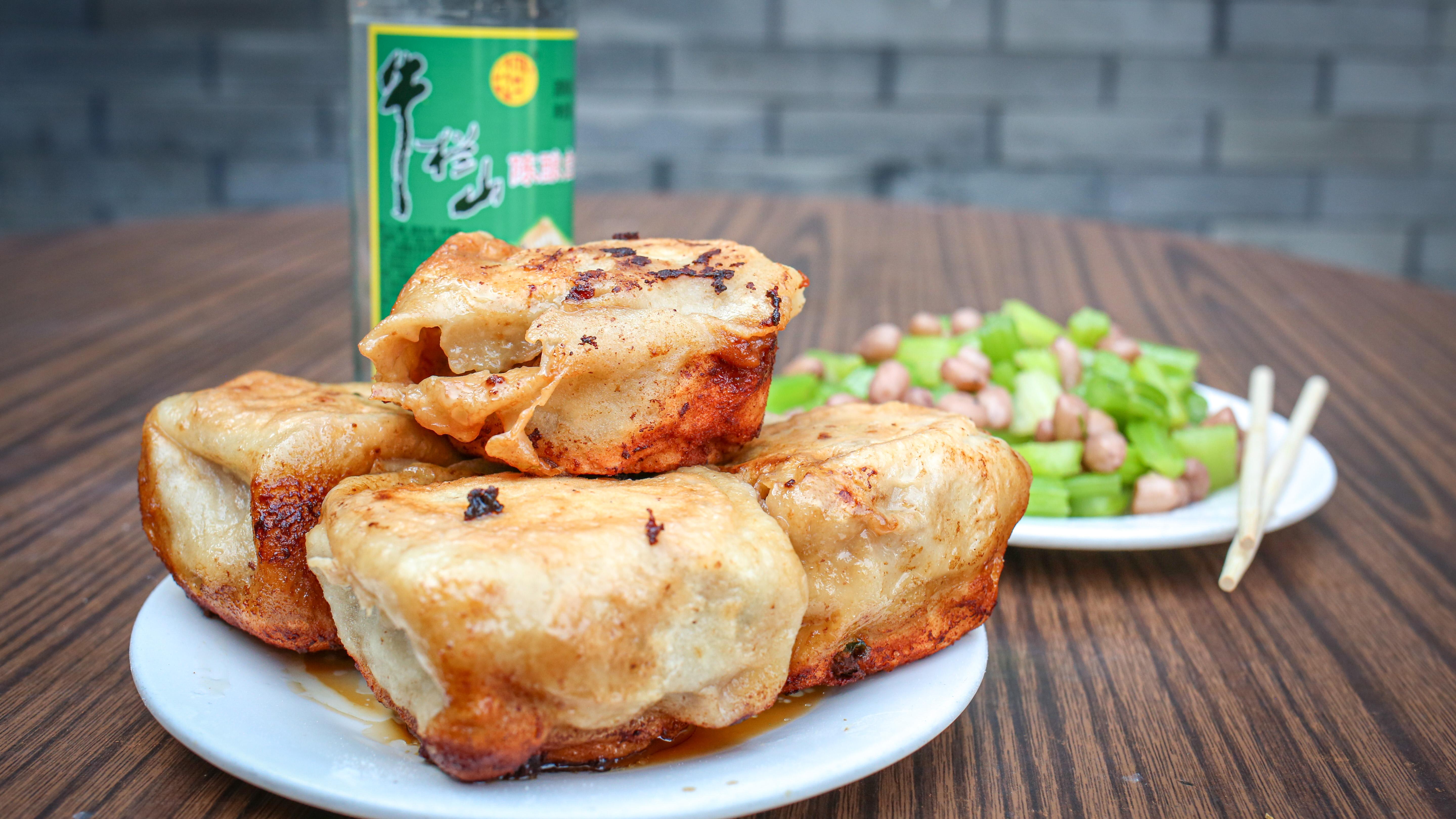
Beijing's street food economy operates on a clock older than the capital itself: vendors appear at dusk, grills flare in the hutong alleys, and by nine the air smells of cumin lamb skewers, scorched scallion pancakes, and the caramelized lacquer of Peking duck skin. The tradition is rooted in the Qing-era system of itinerant cooks who served laborers too far from home to eat a proper meal, and today's carts and shopfronts in Dongcheng and Xicheng Districts preserve that same logic of fast, cheap, intensely flavored food sold where people gather after dark. What matters now is not nostalgia but density. A single hutong block in Gulou or Nanluoguxiang can yield jianbing from a fold-out cart, hand-pulled noodles through a shopfront window, stewed offal in clay pots, and the vinegar-bright punch of liang pi cold noodles, all within fifty meters. The vendors are specialists: one family has grilled only lamb skewers for three generations, another makes only tanghulu, hawthorn berries glazed in hardened sugar syrup that cracks between the teeth. The food is not fusion or farm-to-table; it is template-driven and proud of it, each dish a local answer to hunger that has been refined over decades of repetition. The architectural frame is the hutong itself, the narrow residential lanes that survived demolition and now host the highest foot traffic in the city after sunset. These alleys were never designed for tourism, which is why the food remains tethered to utility rather than spectacle. Sichuan-style malatang—a self-serve hotpot where diners pick raw ingredients from trays and hand them to the cook for boiling in chili oil broth—costs less than a subway ride and feeds construction workers, students, and visitors without distinction. Yunnan rice noodles in bone broth, shaobing filled with spiced pork, and the omnipresent baozi stuffed with chives and egg are sold in volumes that make plating irrelevant. The currency is flavor density, portion size, and the vendor's ability to keep the wok temperature high enough that nothing steams when it should sear. A Beijing street food tour through these districts is not a tasting menu; it is a cross-section of a working food system that happens to be open to anyone willing to eat standing up.
"The food is not fusion or farm-to-table; it is template-driven and proud of it, each dish a local answer to hunger refined over decades of repetition."
A step-by-step walkthrough of the visit — what you'll see, how long each stage takes, and the details that matter.
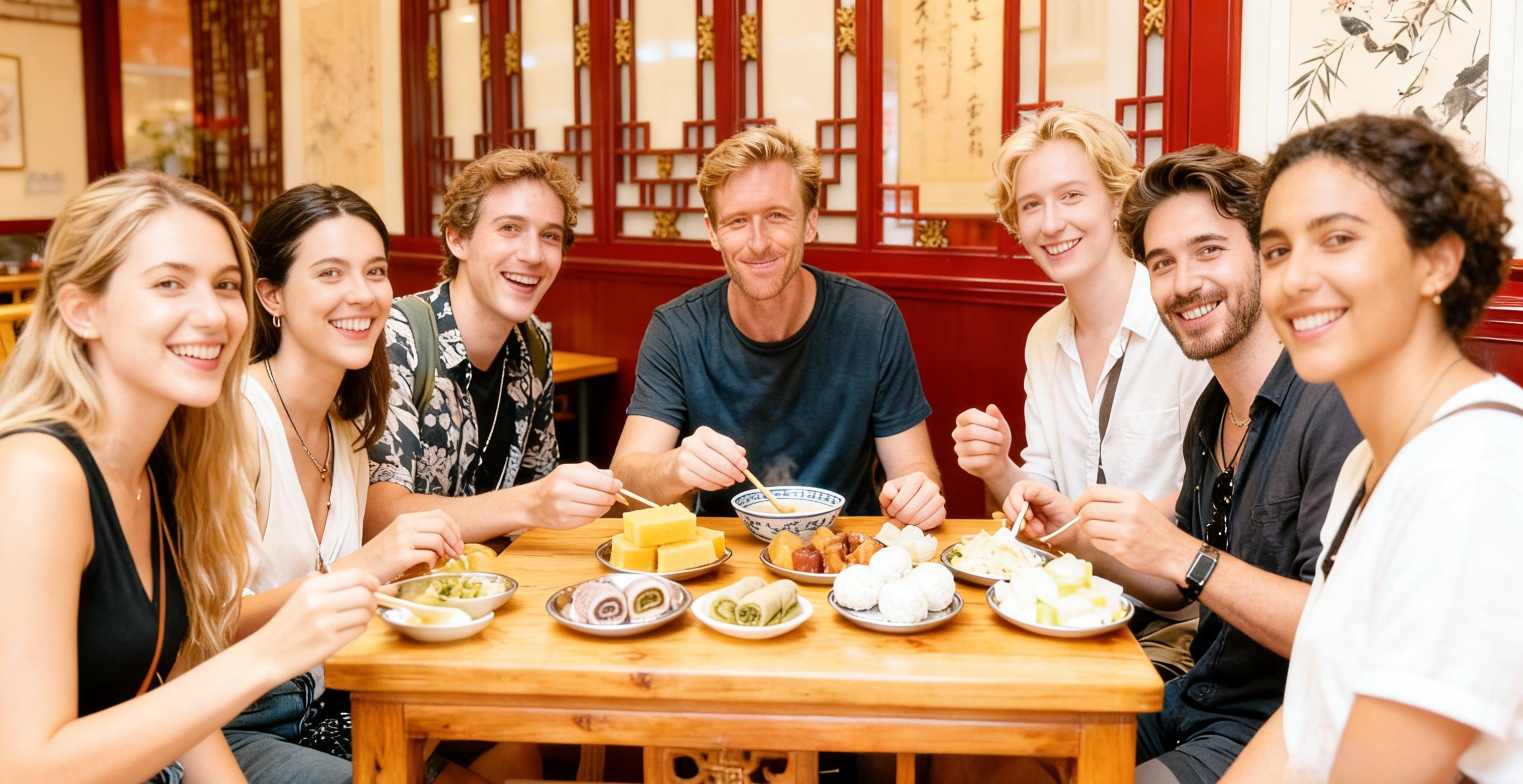
You meet your guide near the Drum Tower at seventeen-thirty, just as the first carts begin to unfold their metal grills and plastic stools appear on the pavement. The group is small—six or eight—and within five minutes you are standing at a jianbing cart watching the cook pour batter onto a circular griddle, crack an egg over it, sweep scallions and cilantro across the surface, then fold the whole sheet around a fried wonton cracker. You eat it while walking, the wrapper still warm enough to steam in your hands. The route moves south into the hutongs. You stop at a lamb skewer grill where the vendor dusts cumin and chili flake over the meat as it cooks, then at a small shopfront for hand-pulled noodles in sesame paste. The guide explains each dish in two sentences—what it is, why it is made this way—then lets you eat without ceremony. By the third stop you have learned to eat faster, because the food is better hot and the group does not linger. The final hour is slower. You sit at a communal table in a hutong courtyard for Peking duck served with pancakes, hoisin, and julienned cucumber, followed by a small bowl of Yunnan rice noodles in broth. The guide pours local craft beer, and for the first time since you started walking, the group talks instead of chewing. You finish near Houhai Lake, the hutong behind you still bright with vendor lights, the street full of people eating dinner on their feet.
Public streets and hutongs are accessible 00:00–23:59. Street food vendors are most active during the best arrival window of 17:00–21:00.
Accessibility varies by specific hutong, as some have narrow or uneven pathways. It is best to check specific beijing street food tour routes for mobility concerns.
Yes, photography is allowed in public areas. Please be respectful and ask permission when taking photos of local vendors.
The best time for a beijing street food tour is 17:00–21:00, when vendors are most active. This is perfect for evening snacking.
No, access is 0 CNY as these are public streets. You only pay for the food you choose to purchase.
Yes, families are welcome. A beijing street food tour is a great way for all ages to experience local culture.
You can use public transit like subway lines 2 or 8 to reach the Dongcheng and Xicheng Districts. These areas are central for most tour meeting points.
There is no strict dress code, but comfortable walking shoes are highly recommended. Practical clothing suits the relaxed vibe of a beijing street food tour.
Bring cash in CNY, a portable charger, and comfortable shoes. Staying prepared helps you enjoy your beijing street food tour without stress.